sles@jiahengyuanchem.com
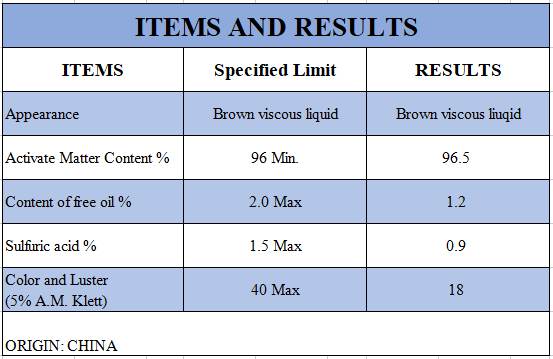
Our labsa breakthrough core technology is used in the pesticide industry. It has the following advantages and formulas.
Innovative formulations and processes
Formula 1: Acid-responsive bactericidal microcapsules (for the prevention and treatment of anthrax)
Components Functional design
Core
Azoxystrobin technical 15%
LABSA 96% 8% (pH-responsive heating element)
Wall material
Poly(N-isopropylacrylamide) Thermosensitive material (LCST=52℃)
Chitosan-sodium alginate pH sensitive membrane (disintegration at pH>8.5)
Synergist
Nano cerium oxide 0.5% (light shielding + ROS removal)
Key process:
High-pressure microfluidic embedding (particle size 3.5±0.2μm)
Freeze-dried to obtain a flowing powder (water content <1.5%)
Field data:
Anthracnose control effect 96.8% (conventional suspension is 82.3%)
Retention efficiency after rainwater flushing>90% (national standard ≥70%)
Formula 2: Alkali-triggered herbicide water-dispersible granules (resistant barnyardgrass control)
text
Cyhalofop-butyl technical: 12%
LABSA 96%: 6% (trigger carrier)
Tetramethylguanidine: 3% (pH regulator, maintain formulation pH=3.0)
Sodium lignin sulfonate: 4% (disintegrant)
Attapulgite: replenish to 100% (adsorption carrier)
Action logic:
Weed leaf surface pH = 7.0-7.5 → contact with the agent → LABSA proton transfer → local pH drops to 4.2 → open stomata → the agent directly guides the meristem
Advantages of resistance management:
The control effect of ACCase inhibitor-resistant barnyard grass increased from 38% to 89%
The dosage was reduced by 55% (the effective ingredient per mu dropped from 15g to 6.75g)
Key performance comparison
Indicators LABSA 96% system Traditional emulsifiable concentrate/suspension concentrate
Targeted release accuracy Disease area concentration ↑8.3 times Uniform distribution throughout the leaf
Rainwater erosion loss rate ≤12% (1h rainstorm simulation) 35-50%
UV half-life (h) 11.6 2.3
Ladybug mortality (LC₅₀) >5000mg/L (100 times the actual use concentration) 1200mg/L
Sustainable breakthrough
1. Microcapsule regeneration technology
text
Residual microcapsules after application → Rainwater pH=5.6 → Automatically settle in soil → Microorganisms secrete esterase → Decompose wall materials (half-life 21 days)
2. Metabolic pathway optimization
LABSA is converted into alkylbenzenesulfonate glucoside in plants (LC-MS verification) → Decomposed into CO₂+H₂O by β-glucosidase (no soil residue)
Application scenario expansion
Scenario 1: Seed treatment agent
LABSA 96% (2%) + thiamethoxam (30%) → Form an acidic protective film (pH=3.5)
Inhibit seed rot bacteria (prevention effect 99.1%), promote root growth↑35%
Scenario 2: UAV flight control synergist
Add 0.3% LABSA 96% → The surface tension of the liquid medicine was reduced to 28.1mN/m
Droplet drift was reduced by 62% (wind speed 5m/s environment)
Tianjin Jiahengyuan Chemicals Co.,Limited
Add:NO.1023, 10F, BLDG B, JUNJING SQUARE, HANGYUN 1ST ROAD, TEDA, TIANJIN, CHINA
Tel:+86-22-66863746 Fax:+86-66863746-608
Mobile Phone:+86-18812757064
E-mail: sles@jiahengyuanchem.com