sles@jiahengyuanchem.com
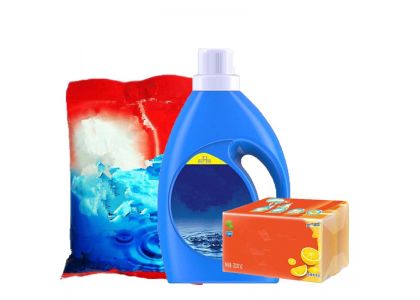
Powdered detergents are mainly washing powder and soap-based washing powder. Laundry powder is an alkaline synthetic detergent.
The main components are anionic surfactants such as sodium alkylbenzene sulfonate,
A small amount of non-ionic surfactant, plus some auxiliary agents, is made by mixing, dusting and other processes. Soap-based laundry detergent is a cleaning product that has been on the market in recent years. It is different from synthetic laundry detergent in that its main component is soap, and one or more surfactants [3] and detergent builders are added. Surfactants include fatty acid polyoxyethylene ether, fatty acid alkanolamide and other nonionic surfactants with strong detergency, and builders are added at the same time.
Liquid detergent for clothes is the largest category of liquid detergent products. Liquid detergent is known as "energy-saving product". It is more and more popular because of its simple production process and equipment, energy saving, low operating cost, easy dissolution, low temperature or normal temperature washing and many other advantages.
Laundry soap is the soap used to wash clothes. Laundry soap is a bar of hard soap, the main active ingredient is fatty acid sodium salt, in addition, laundry soap also contains builders, fillers, etc. Laundry soap is an alkaline detergent whose aqueous solution is alkaline. It has strong detergency, moderate foam and easy to use. Its disadvantage is that it is not resistant to hard water and will produce soap scum when washed in hard water.
The function of detergent: Detergent can wash away oil stains because detergent is alkaline.
The main component of detergent is surfactant, which contains hydrophilic groups and hydrophilic groups in its molecular structure.
Oil-based two-part organic compound. Generally, according to whether the surfactant can be decomposed into ions in aqueous solution, it is divided into two categories: ionic surfactant and non-ionic surfactant. Ionic surfactants can be divided into cationic surfactants, anionic surfactants and zwitterionic surfactants.
Tianjin Jiahengyuan Chemicals Co.,Limited
Add:NO.1023, 10F, BLDG B, JUNJING SQUARE, HANGYUN 1ST ROAD, TEDA, TIANJIN, CHINA
Tel:+86-22-66863746 Fax:+86-66863746-608
Mobile Phone:+86-18812757064
E-mail: sles@jiahengyuanchem.com